


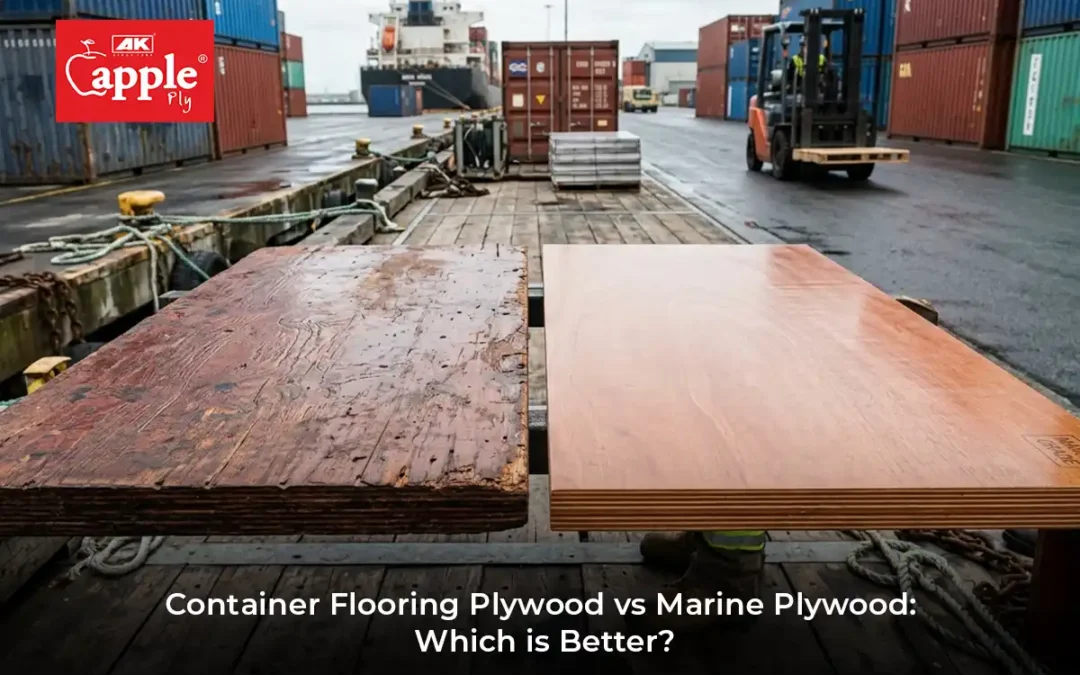
Understanding the Difference Between Container Flooring and Marine Plywood
Choosing the right type of plywood is critical when durability, strength, and environmental resistance are key considerations. Two commonly compared options are Container Flooring Plywood and Marine Plywood, both known for their high performance, but designed for very different applications.
While Marine Plywood is widely used in moisture-prone environments, Container Flooring Plywood is engineered specifically for heavy-load and high-impact applications. Understanding their differences helps architects, builders, and manufacturers make more informed material decisions.
As a trusted name in high-performance wood solutions, AK Apple Ply offers both specialised and structural plywood options designed to meet diverse industry requirements.
What is Marine Plywood?
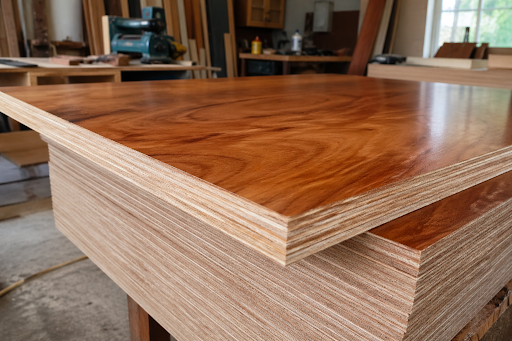
Marine Plywood is manufactured using high-quality hardwood veneers bonded with waterproof adhesives, making it highly resistant to moisture and humidity.
Key Features of Marine Plywood:
- Boiling Water Proof (BWP) grade (IS 710)
- Excellent resistance to moisture and fungal attack
- Uniform core with minimal gaps
- Suitable for wet and humid environments
Common Applications:
- Kitchen cabinets
- Bathroom interiors
- Boat building and coastal constructions
- Outdoor furniture
For projects where water exposure is a concern, choosing the right grade is essential. You can explore detailed specifications here: Marine Plywood
Marine plywood is ideal where water exposure is frequent, but it is not specifically designed to handle extreme weight or abrasion.
What is Container Flooring Plywood?
Container Flooring Plywood is a specialised, high-density panel engineered for heavy-duty industrial use, particularly in shipping containers and transport flooring.
Key Features of Container Flooring Plywood:
- High load-bearing capacity
- Exceptional impact resistance
- Anti-slip surface (often chequered or treated)
- Enhanced durability under constant movement and friction
Common Applications:
- Shipping container floors
- Truck and trailer flooring
- Warehouses and industrial platforms
- Heavy-duty commercial flooring
For industrial-grade applications and transport durability, learn more here: Container Flooring Plywood
This type of plywood is built to withstand dynamic loads, making it far more robust in high-stress environments.
Container Flooring Plywood vs Marine Plywood: A Detailed Comparison
1. Strength & Load Capacity
Container Flooring Plywood is specifically designed for heavy loads and continuous stress. It can handle the weight of cargo, machinery, and constant movement.
Marine Plywood, while strong, is not engineered for such extreme load-bearing applications.
Winner: Container Flooring Plywood
2. Water Resistance
Marine Plywood excels in moisture resistance due to its waterproof bonding and dense core structure.
Container Flooring Plywood offers some resistance but is not primarily designed for prolonged water exposure.
Winner: Marine Plywood
3. Construction & Technical Specifications
Container flooring plywood is engineered with a robust multi-layer structure to deliver superior strength and durability for heavy-duty applications.
- Thickness: 28mm
- Number of Plies: 19 plies
This high ply count ensures better load distribution, dimensional stability, and resistance to bending or warping, making it ideal for industrial and container flooring applications.
4. Durability in Harsh Conditions
Container Flooring Plywood performs better in environments involving friction, impact, and heavy usage.
Marine Plywood performs well in humid conditions but may wear faster under mechanical stress.
Winner: Container Flooring Plywood
5. Surface & Finish
Marine plywood typically has a smooth, uniform surface suitable for interiors and finishing.
Container flooring plywood often includes anti-slip or textured surfaces for safety and functionality.
Winner: Depends on the application
6. Application Suitability
- For interiors, kitchens, and moisture-prone areas → Marine Plywood
- For transport, industrial flooring, and heavy-duty use → Container Flooring Plywood
Choosing the Right Plywood for Your Needs
The decision between Container Flooring Plywood and Marine Plywood ultimately depends on the environment and application.
If your project involves:
- Constant exposure to water → Marine Plywood is the better choice
- Heavy loads, movement, and wear → Container Flooring Plywood is more suitable
To explore the complete range of plywood solutions and make an informed choice: https://appleplywoods.com/